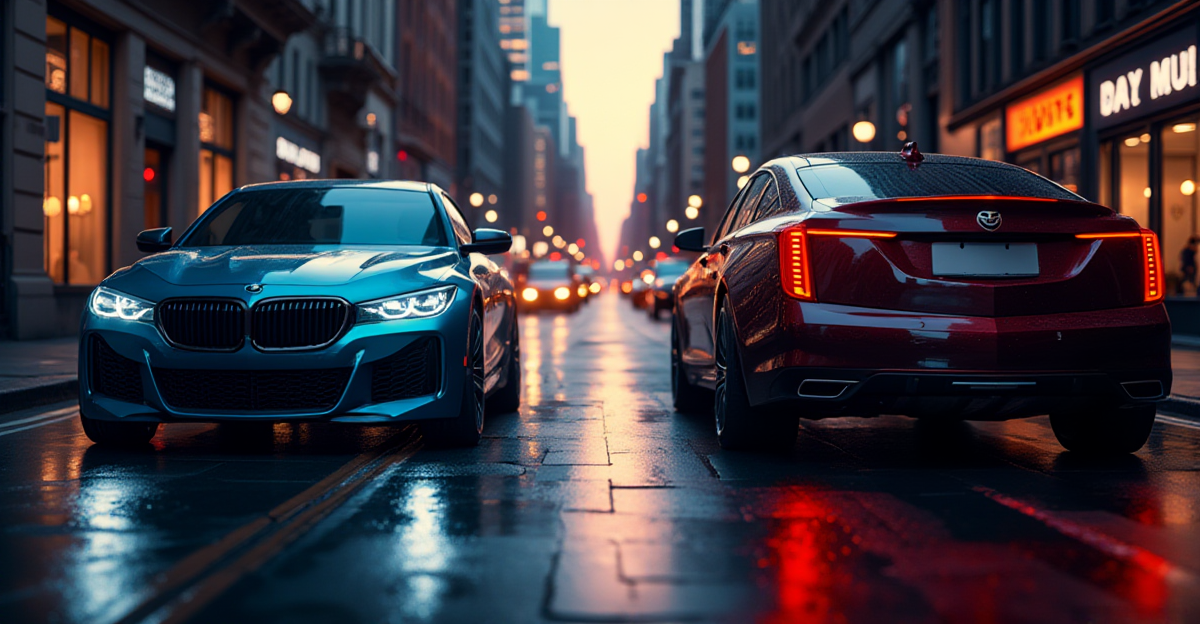
The escalating BMW Cadillac battle has captivated the luxury automotive market, drawing enthusiasts and casual drivers alike into a heated discussion about which brand reigns supreme in the United States.
Both automakers boast rich histories and a commitment to innovation, yet they appeal to different segments of the luxury consumer base.
The BMW badge is synonymous with sportiness and driving pleasure, while Cadillac embodies a classic American luxury aesthetic with its bold designs and advanced features.
In this analysis of the BMW Cadillac battle, various factors such as performance, technology, and customer experience will be examined.
With their distinct characteristics and target audiences, the rivalry between these two titans raises compelling questions: which luxury brand offers the ultimate experience on the road?
Join the exploration as we dissect the attributes that make each brand unique and determine who emerges victorious in this clash of automotive excellence.
Key Takeaways
- Luxury Appeal: BMW’s sporty performance and Cadillac’s classic elegance both aim to attract the luxury consumer, showcasing unique aspects of their design philosophies.
- Technology Focus: BMW often leads in innovative technology integration, offering features like advanced driver assistance systems, while Cadillac emphasizes infotainment systems that enhance driver connectivity.
- Brand Heritage: Cadillac leverages its rich American heritage, creating a distinct brand identity that appeals to nostalgic consumers, in contrast to BMW’s strong German engineering reputation.
- Market Positioning: BMW targets a younger demographic with a focus on driving dynamics, while Cadillac aims to establish itself in the luxury SUV segment by appealing to families seeking comfort and style.
- Performance Rivalry: The competitive dynamics between BMW’s nimble sports models and Cadillac’s powerful sedans highlight differing approaches to performance, with each brand vying for leadership in the luxury vehicle market.
1. Understanding the Heritage of BMW and Cadillac
The BMW Cadillac battle offers a fascinating look into the legacy of two luxury automotive giants.
BMW, founded in 1916, is renowned for its engineering excellence and focus on the driving experience, presenting itself as the “Ultimate Driving Machine.” In contrast, Cadillac, established in 1902, embodies American luxury with an emphasis on style and comfort, historically symbolizing success and prestige.
Both brands have evolved over time, yet each retains a distinct identity that appeals to different consumer preferences.
“In the luxury automotive landscape, it’s not just about the car; it’s about the legacy that drives perception and choice.”
– Julia Schott, Automotive Industry Analyst
With changing consumer demands, understanding this heritage can guide car enthusiasts and potential buyers.
Each brand represents a unique blend of innovation and tradition, making it essential to identify personal priorities when selecting a luxury vehicle.
For instance, those favoring dynamics often lean towards bmw, while lovers of sophisticated elegance may prefer Cadillac’s offerings.
1.1 Performance Metrics in the BMW Cadillac Battle
In the ongoing BMW Cadillac battle, performance metrics play a crucial role in consumer choice.
Both brands offer high-performance vehicles, yet they approach engineering with different philosophies.
BMW emphasizes a balance of power and handling, often utilizing rear-wheel drive dynamics that enhance agility.
Conversely, Cadillac leverages cutting-edge technology like Magnetic Ride Control to optimize ride quality and stability.
This focus on innovative technology allows Cadillac to compete effectively, especially in terms of luxury and comfort.
Ultimately, consumers must weigh these differing characteristics to determine which brand aligns more closely with their driving preferences and lifestyle.
1.2 Performance Innovations in the BMW Cadillac Battle
The BMW Cadillac battle extends beyond luxury into the realm of performance.
Both brands invest heavily in engineering advancements to enhance driving dynamics.
For instance, BMW’s M division focuses on lightweight materials and superior aerodynamics to increase speed and efficiency.
Conversely, Cadillac’s V-Series showcases a commitment to power through formidable engines, exemplified by the CT5-V Blackwing, which boasts a supercharged V8.
Each automaker strives to refine their sport sedans to appeal to performance enthusiasts, making the competition not only about luxury features but also about engineering prowess.
This relentless pursuit of excellence shapes the landscape for premium automotive performance.
2. Key Differences in Luxury Car Features: BMW vs Cadillac
In the ongoing BMW Cadillac battle, unique attributes define each brand’s luxury offerings.
BMW focuses on a blend of performance and technological innovation, providing a driver-centric experience that emphasizes agility and precision.
In contrast, Cadillac prioritizes a smooth ride and plush interiors, appealing to consumers who value comfort and luxury.
| Feature | BMW | Cadillac |
|---|---|---|
| Performance | Sport-tuned with superior handling | Comfort-driven with smooth ride |
| Technology | Advanced driver-assistance systems | Elegant infotainment interface |
| Interior Quality | Minimalist and modern | Opulent and traditional |
A clear illustration of this distinction comes with bmw models featuring dynamic suspension systems, which enhance control during sharp turns, making them particularly appealing for driving enthusiasts.
On the other hand, Cadillac’s incorporation of high-quality leather and advanced noise-cancelation technology establishes a serene environment designed for relaxation.
Understanding these key differences enables buyers to make informed decisions that align with their preferences and lifestyle.
2.1 Performance Innovations in the BMW Cadillac Battle
The BMW Cadillac battle is characterized by significant advancements in performance capabilities, specifically in their flagship sedans.
BMW’s 5 Series has traditionally emphasized a sporty driving experience with its agile handling and responsive engines.
The introduction of the BMW M550i xDrive, featuring a powerful twin-turbo V8, showcases the brand’s commitment to performance and luxury.
Conversely, Cadillac counters with its CT5-V Blackwing, which boasts an output that rivals its German competitor.
This model integrates a supercharged V8, offering drivers thrilling acceleration and dynamic driving dynamics.
Such innovations reflect the ongoing rivalry between these automotive giants, pushing each brand to elevate its engineering prowess.
2.2 Performance Innovations in the BMW Cadillac Battle
In the ongoing BMW Cadillac battle, performance innovations play a crucial role in attracting customers.
BMW consistently emphasizes its engineering prowess with models like the M series, which are designed for exhilarating driving experiences.
These vehicles often feature advanced technology such as adaptive suspensions and high-performance engines, showcasing the brand’s commitment to performance and precision.
Conversely, Cadillac counters with its V-Series lineup, which highlights a bold design alongside powerful performance.
These models utilize turbocharged engines and innovative drive systems to compete directly with BMW’s offerings, appealing to enthusiasts looking for both luxury and speed.
3. Performance Comparison: Which Brand Delivers More Power?
In the ongoing BMW Cadillac battle, performance is a key indicator of which luxury brand stands tall.
BMW typically emphasizes a sporty driving experience, often highlighting their dynamic handling and agile acceleration.
For example, the BMW M series, with its high-performance engines, consistently leaves a mark with its thrilling capability on the road.
Meanwhile, Cadillac counters with its V-series, known for powerful engines and luxury comfort, exemplifying strength in both performance and style.
When considering power delivery, buyers should evaluate the engine options available.
Prospective owners might look at models like the BMW 3 Series and Cadillac CT5—both offer impressive horsepower.
Additionally, fuel efficiency should not be overlooked, especially with the rise of hybrid and electric options.
To better inform decisions, consider these factors:
- Engine capabilities and specifications
- 0-60 mph acceleration times
- Driving modes and performance tuning
- Weight distribution and handling
- Consumer reviews and performance tests
Understanding these elements can lead to a clearer choice in this fierce competition.
3.1 Performance Dynamics in the BMW Cadillac Battle
In the ongoing BMW Cadillac battle, performance dynamics play a crucial role in consumer preference.
Both automakers emphasize engineering excellence, yet they approach it differently.
BMW, known for its sporty drive, often incorporates advanced aerodynamics and lightweight materials to enhance speed and agility.
In contrast, Cadillac prioritizes luxury alongside performance, offering models with powerful engines and sophisticated suspension systems that optimize comfort.
For instance, the BMW M Series exemplifies high-performance engineering, while the Cadillac V-Series showcases a robust blend of power and luxury.
This distinctive focus on performance features distinguishes their identities in the competitive automotive landscape.
3.2 Performance Metrics in the BMW Cadillac Battle
In the ongoing BMW Cadillac battle, performance metrics play a crucial role in defining each brand’s competitive edge.
BMW is renowned for its engineering prowess, consistently delivering vehicles that exemplify precision and agility.
The M series, for example, showcases remarkable acceleration and handling, attracting enthusiasts who prioritize driving dynamics.
Conversely, Cadillac emphasizes luxury coupled with performance, especially in models like the Escalade-V, which marries a powerful V8 engine with opulent interiors.
This strategic focus on tailored features allows each brand to cater to distinct consumer preferences, ultimately shaping the future landscape of the luxury automotive market.
4. Design Aesthetics: The Style Wars Between BMW and Cadillac
The design aesthetics of BMW and Cadillac represent a pivotal aspect of the ongoing BMW Cadillac battle.
BMW embraces a sporty, dynamic style characterized by sharp lines and aggressive stances, appealing to the performance-oriented consumer.
The signature kidney grille and iconic headlights create a sense of motion, while the interior focuses on driver-centric ergonomics and premium materials.
In contrast, Cadillac emphasizes a bold, contemporary design language that showcases its American roots.
With strong angular shapes and a luxurious presence, Cadillac’s vehicles, like the Escalade, are designed for those who prefer a commanding street presence and advanced technology integration.
This difference manifests in practical applications, such as BMW’s performance models aimed at driving enthusiasts, while Cadillac offers plush features ideal for comfort seekers.
Ultimately, both brands cater to distinct tastes, making the choice largely subjective based on individual aesthetic preferences.
4.1 Innovations Driving the BMW Cadillac Battle Forward
The BMW Cadillac battle has seen both brands pushing the boundaries of innovation.
BMW, known for its performance and engineering, has introduced advanced technology such as its intuitive iDrive system, enhancing driver interaction and control.
On the other hand, Cadillac has responded with its Super Cruise feature, setting new standards in autonomous driving.
These innovations not only reflect the brands’ efforts to captivate consumers but also spotlight their respective ambitions to lead in the luxury vehicle market.
Ultimately, the ongoing competition between these automotive giants ensures that consumers benefit from cutting-edge advancements and heightened quality across the board.
4.2 Performance Dynamics in the BMW Cadillac Battle
The BMW Cadillac battle is not solely about luxury; it heavily emphasizes performance dynamics.
BMW, known for its engineering prowess, integrates precision and agility into its lineup, appealing to driving enthusiasts.
For instance, the M series exemplifies this, boasting powerful engines and advanced handling that elevate the driving experience.
In contrast, Cadillac’s V series aims to challenge this supremacy by offering robust performance alongside refined comfort.
Models like the CT5-V Blackwing highlight this strive for excellence, featuring supercharged engines that compete head-to-head with the best from Munich.
This ongoing rivalry shapes the expectations of both brands’ consumers.
5. Pricing Strategies: Evaluating Cost vs Value in Luxury Vehicles
In the luxury automotive market, the pricing strategies adopted by brands like BMW and Cadillac play a pivotal role in shaping consumer perceptions.
The ongoing BMW Cadillac battle illustrates how these manufacturers position their offerings based on perceived value and affordability.
BMW typically employs a value-based pricing strategy, emphasizing engineering excellence and driving dynamics, which appeals to enthusiasts willing to invest more upfront for superior performance.
In contrast, Cadillac has focused on competitive pricing to attract a broader audience, often offering more features at a lower cost, which positions it favorably against its BMW counterparts.
Understanding the distinction between price and value is crucial for consumers.
For example, while a BMW may come at a higher price point, its resale value and brand prestige can lead to a more favorable long-term investment.
Buyers should evaluate these aspects critically, considering factors such as features, warranty offerings, and maintenance costs to make informed decisions in the luxury segment.
5.1 Performance Metrics in the BMW Cadillac Battle
The performance metrics in the BMW Cadillac battle reveal significant differences in engineering philosophy.
BMW’s focus on balanced handling and rear-wheel-drive dynamics often results in a driving experience that emphasizes sportiness.
For instance, the M Series models showcase superior acceleration and cornering capabilities, making them attractive to enthusiasts.
In contrast, Cadillac prioritizes luxury and comfort, particularly evident in its V-Series line, which combines robust power with a smoother ride quality.
This divergence illustrates how each brand appeals to distinct customer preferences, impacting market positioning and sales strategies within the competitive luxury automotive landscape marked by the ongoing BMW Cadillac battle.
5.2 Evolution of Technology in the BMW Cadillac Battle
The BMW Cadillac battle extends beyond mere luxury aesthetics, diving deep into technological advancements.
BMW has consistently integrated cutting-edge features, such as the iDrive system, which revolutionized in-car connectivity and information management.
Meanwhile, Cadillac counters with innovations like the Super Cruise, an advanced hands-free driving system that enhances user experience.
Both brands compete fiercely in the realm of electric vehicle development, showcasing their commitment to sustainability.
For instance, BMW’s i4 and Cadillac’s Lyriq are prime examples of how electric performance is becoming increasingly pivotal in this rivalry.
These technological strides are crucial in shaping consumer preferences and brand loyalty in the evolving automotive landscape.
6. Customer Experience: Service and Satisfaction in BMW and Cadillac
In the ongoing BMW Cadillac battle, customer experience plays a pivotal role in determining brand loyalty and satisfaction.
BMW is renowned for its precise engineering and superior service, emphasizing personalized attention and seamless interactions.
Owners often report high levels of satisfaction stemming from the brand’s commitment to excellence in after-sales support, ensuring that every drive feels unique.
Conversely, Cadillac has made significant strides in enhancing its customer experience, focusing on a more luxurious dealership atmosphere and convenience.
The brand offers streamlined services, ensuring quick resolutions to issues, which many users appreciate.
Both brands encourage feedback, which is essential for continuous improvement.
For example, utilizing regular customer surveys can provide valuable insights into what areas each brand excels in and where enhancements are needed to elevate the overall experience.
Navigating this customer-centric landscape is crucial for both BMW and Cadillac as they strive to win in the luxury vehicle market.
6.1 Performance Specifications in the BMW Cadillac Battle
The BMW Cadillac battle highlights the intense rivalry between these premium automakers, particularly in terms of performance.
BMW has long been known for its focus on driving dynamics, often featuring rear-wheel drive and precise handling characteristics.
For example, models like the BMW M3 showcase this commitment, delivering exceptional power and agility.
On the other hand, Cadillac is making strides with its V-Series, such as the CT5-V Blackwing, which emphasizes both luxury and raw performance.
This competition drives innovation and pushes both brands to refine their engineering, offering buyers options that excel in speed, handling, and overall driving experience.
6.2 Performance Dynamics in the BMW Cadillac Battle
A critical factor driving the BMW Cadillac battle is performance engineering.
BMW, renowned for its emphasis on driving dynamics, utilizes precision-engineered components like the M series, which emphasize agility and speed.
For instance, the BMW M3’s powerful engine configuration and advanced suspension systems allow it to excel in tight cornering and high-speed situations.
In contrast, Cadillac prioritizes a blend of comfort and performance, as seen in the CT4-V Blackwing.
This model showcases supercharged engines and advanced technology, embodying luxury and power.
Both brands continue to innovate, pushing the limits of their vehicles, thereby intensifying competition within the market.
7. Avoiding Common Pitfalls: What to Consider Before Choosing Between BMW and Cadillac
Selecting between BMW and Cadillac can be challenging, especially in the competitive landscape of the BMW Cadillac battle.
It’s essential to understand each brand’s unique qualities and to avoid common pitfalls.
First, consider your driving preferences.
BMW focuses on sporty performance and handling, while Cadillac emphasizes luxury and comfort.
If a thrilling ride is a priority, BMW may be the better option.
Next, assess your lifestyle needs.
For instance, if spacious interiors and advanced tech are crucial, Cadillac offers impressive options like the Escalade.
Additionally, maintenance costs can vary significantly; reviewing long-term ownership expenses is vital.
Practical evaluations, such as test-driving various models, will provide firsthand experience of comfort and performance.
Lastly, understanding how each brand fits into your personal values and aspirations can make a decisive impact on your choice between these iconic luxury brands.
7.1 Performance Comparison in the BMW Cadillac Battle
The BMW Cadillac battle significantly hinges on performance metrics, with each brand delivering unique driving experiences.
BMW is celebrated for its precision engineering, often incorporating turbocharged engines that provide exceptional acceleration and handling.
Conversely, Cadillac focuses on a blend of luxury and robustness, with models like the CT5-V Blackwing showcasing power through a supercharged V8.
This diverging focus creates distinct driving profiles; BMW tends to appeal to enthusiasts seeking agility and sportiness, while Cadillac attracts those desiring a blend of comfort and high-performance capability.
Ultimately, the outcome of the BMW Cadillac battle is influenced by individual driving preferences and priorities.
7.2 Engineering Innovations in the BMW Cadillac Battle
The BMW Cadillac battle is not only a clash of brands but also a competition of engineering excellence.
BMW has long been recognized for its precision engineering and dynamic performance.
Its commitment to lightweight materials and advanced powertrain technology has produced models like the M-Series, which are synonymous with high-speed stability and agility.
Conversely, Cadillac has been making strides in luxury combined with cutting-edge technology.
The introduction of the Super Cruise system exemplifies Cadillac’s focus on autonomous driving capabilities, setting a benchmark in the luxury vehicle segment.
This ongoing rivalry showcases how each brand is pushing the boundaries of innovation and consumer experience.
Conclusion
In the enduring rivalry between BMW and Cadillac, both brands offer distinct advantages that cater to varying preferences in luxury, performance, and innovation.
BMW’s engineering prowess delivers a dynamic driving experience, underpinned by a reputation for precision and agility, making it the go-to choice for driving enthusiasts.
Conversely, Cadillac’s dedication to comfort, advanced technology, and American craftsmanship presents a compelling case for those seeking a luxurious, spacious ride with a touch of sophisticated style.
Ultimately, the decision hinges on individual priorities: whether one values sporty performance or lavish comfort.
For potential buyers, test-driving models from both brands is a vital step in determining which luxury vehicle aligns with personal preferences.
Additionally, staying informed about upcoming models and technological advancements can further enhance the decision-making process.
As the competition between these two iconic manufacturers continues to evolve, consider what truly defines luxury for you.
Will it be the thrill of driving or the embrace of plush comfort?
The choice is yours to make, and whichever brand you lean towards, ensure it reflects your lifestyle and aspirations.
Now, engage with the brands, look into the latest offerings, and get ready to experience the luxury that suits you best.
Are you team BMW, team Cadillac, or perhaps a bit of both?
Your next driving adventure awaits.
Frequently Asked Questions (FAQs)
What are the main differences in performance between BMW and Cadillac?
BMW is known for its sportier handling and performance, often focusing on a more dynamically engaging driving experience with rear-wheel-drive layouts in many models.
In contrast, Cadillac emphasizes comfort and a smooth ride, favoring luxury over pure performance.
Both brands offer powerful engines, but BMW typically delivers sharper responsiveness thanks to its engineering philosophy and design focus.
How does the interior quality of BMW compare to Cadillac?
Both brands prioritize premium materials and craftsmanship, yet their designs differ significantly.
BMW interiors are often more minimalist and tech-oriented, featuring sleek lines and modern displays.
Cadillac, on the other hand, tends to focus on a traditional luxury aesthetic, incorporating lavish materials and a more ornate style.
Ultimately, personal taste plays a large role in determining which interior feels more inviting.
Which brand offers better technology and infotainment systems?
BMW is renowned for its advanced technology, especially in its iDrive system, which is user-friendly with impressive connectivity options.
Cadillac also provides a sophisticated system, known as CUE, though it’s often considered less intuitive.
Overall, BMW delivers superior integration of technology with their vehicles, while Cadillac is working on improvements to enhance user experience in this area.
Are the maintenance costs higher for BMW or Cadillac?
Generally, BMW’s maintenance costs tend to be higher than those of Cadillac.
This is primarily due to the more specialized parts and labor often required for BMW vehicles, as well as their advanced technology systems.
Cadillac offers a more affordable maintenance experience, but owners of both brands should still budget for regular upkeep to ensure long-term reliability and performance.
Which brand has a better resale value in the U.S.?
Typically, BMWs hold slightly better resale value compared to Cadillacs, benefiting from strong brand recognition and demand in the luxury market.
Factors influencing resale value include market trends, vehicle condition, and mileage.
However, Cadillac is making strides in improving its reputation, especially with newer models that offer compelling features, which can influence future resale trends.
How do the two brands rank in terms of safety ratings?
Both BMW and Cadillac prioritize safety and usually receive high ratings from agencies like the IIHS and NHTSA.
BMW tends to excel in active safety features with its advanced driver-assistance technologies, enhancing overall protection.
Cadillac also offers strong safety ratings with a focus on comfortable rides, but may not always match BMW’s cutting-edge innovation in this area.
📌 Sources & Further Reading
[Source 1:] Car and Driver – In-depth reviews and comparisons of BMW vehicles.
[Source 2:] MotorTrend – Insights and analysis on BMW models and the brand’s overall performance.
[Source 3:] Autotrader – Reviews and rankings of Cadillac vehicles, highlighting their features and technology.